
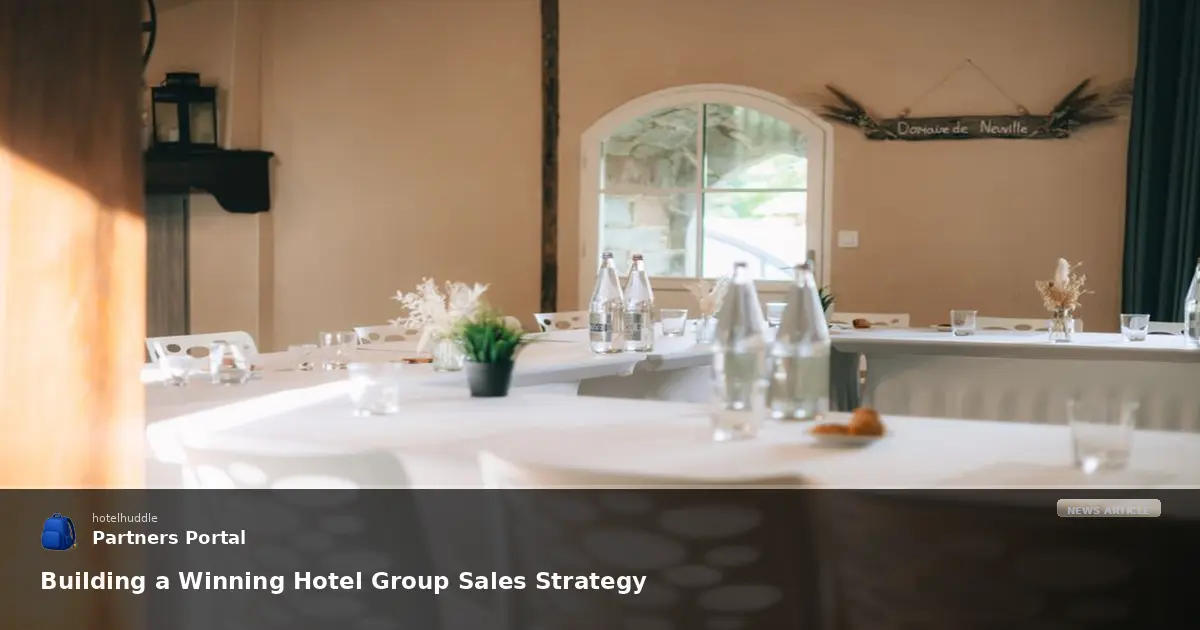
Group business remains one of the most lucrative revenue streams available to a hotel, yet many properties treat it as an afterthought — filling unsold inventory with whatever inquiries happen to arrive. A deliberate hotel group sales strategy changes that. It turns sporadic meeting and event requests into a dependable pipeline of room blocks, corporate retreats, and association bookings. For hotel owners and managers, the payoff is measurable: higher occupancy during shoulder seasons, stronger average daily rates, and more predictable revenue. Below are the building blocks of a group sales approach that wins more business consistently.
Why a Hotel Group Sales Strategy Matters
Meetings, weddings, sports tournaments, and corporate events rarely book a single room. They book dozens — sometimes hundreds — across multiple nights, often during midweek or shoulder periods when leisure demand is soft. A focused hotel group sales strategy lets you capture that demand deliberately rather than hoping it shows up. It also gives your team a shared playbook, so every inquiry is handled the same professional way regardless of who answers the phone.
Define Your Target Group Segments
Not every group is a good fit for your property. A winning plan begins with clarity about who you are trying to attract. Corporate meetings may value flexible cancellation terms and audiovisual support, while sports teams care more about breakfast timing and late checkout. Weddings and social blocks prioritize event space and courtesy room-block holds. Pick the two or three segments that align with your room count, location, and amenities, then tailor your outreach, packages, and pricing to each one.
Make Your Property Easy to Find
Planners start their search online, so your property needs to be visible where group organizers are looking. When you list your hotel on a dedicated partner platform, you put your meeting and event spaces in front of planners who are actively sourcing group accommodations. Keep your space details current — accurate square footage, capacity charts, and high-quality photos remove friction from the first impression and shorten the path from browsing to sending an RFP.
Master the RFP Response
Speed wins group business. The first professional proposal in a planner's inbox carries a real advantage, because organizers frequently shortlist the properties that respond fastest and most completely. Centralize your hotel RFP management so incoming requests are never left sitting in an inbox. Reply with a tailored proposal that answers the planner's actual questions — dates, rates, room-block terms, and event space — rather than a generic rate sheet. Then follow up politely and persistently; group decisions can take weeks, and consistent touchpoints keep your property top of mind.
Price Blocks Strategically
Group pricing is a balancing act. Quote too low and you leave revenue on the table; quote too high and you lose the block to a competitor. Use historical data and current demand to inform every quote, and build in the flexibility to adjust concessions — complimentary rooms, upgrades, or waived meeting-room rental — based on the value of the block. A thoughtful approach to competitive pricing helps you win blocks that are profitable, not just busy.
Convert Interest Into Contracts
Once a proposal is accepted, move quickly to a signed agreement with clear terms on block size, attrition, cutoff dates, and payment schedules. The less ambiguity in the contract, the smoother the fulfillment and the stronger the relationship with the planner. Set expectations early about pickup reporting and name-list deadlines so the event runs cleanly for both sides — and so that same planner thinks of you first next year.
Measure and Refine
The most effective group sales programs are data-driven. Track your win rate, average block size, revenue per group, and how quickly you respond to inquiries. Review those numbers monthly to spot where deals are stalling and which segments deliver the strongest returns. Small adjustments — a faster response template, a sharper pricing tier, a better follow-up cadence — compound into a meaningful lift in group revenue over time.
Group business should not be left to chance. With a defined target, a strong online presence, disciplined RFP handling, strategic pricing, and consistent measurement, any property can build a hotel group sales strategy that fills rooms and strengthens the bottom line. The hotels that treat group sales as a repeatable system — rather than a series of one-off requests — are the ones that win the blocks their competitors let slip away. Ready to put your property in front of more planners? Becoming a hotel partner is the first step toward a fuller group pipeline.