
Independent hoteliers often treat pricing as an art — a gut call made each week based on what competitors seem to be charging. The most profitable properties treat it as a science instead. Hotel revenue management is the disciplined practice of forecasting demand, setting rates deliberately, and controlling which rooms you sell through which channels and at what price. For an independent property without a corporate revenue team, mastering the fundamentals is often the difference between full occupancy at thin margins and strong RevPAR with money left over.
Revenue management is not about charging the highest possible rate. It is about charging the right rate for each night, each segment, and each booking window. Done well, it lifts both occupancy and average daily rate at the same time — a combination that compounds across a full year.
Why Independent Properties Need Revenue Management
Chain hotels arrive with dedicated revenue managers, forecasting software, and years of aggregated demand data. Independents have to compete for the same guests with a fraction of that machinery — which is precisely why a structured approach matters. Without one, the typical result is reactive pricing: dropping rates when the calendar looks soft, then leaving money on the table when a weekend sells out too early.
A consistent hotel revenue management routine replaces guesswork with decisions you can defend. It lets a small property react to demand shifts in hours rather than days, and it turns your limited room inventory into a lever rather than a liability.
Demand Forecasting: Know Your Patterns
Every pricing decision starts with a forecast. Look at your own booking history first: which weekdays fill from business travel, which weekends depend on leisure or events, and how far in advance each segment tends to book. Layer on the local demand drivers you can see — a convention, a festival, a sports tournament, or a competitor that has paused taking reservations.
You do not need enterprise software to begin. A simple calendar that tracks pace versus last year, plus a short list of upcoming local events, gives you enough signal to set a sensible base rate for every future date. The goal is a forecast you can update weekly, not a perfect model.
Dynamic Pricing Without the Race to the Bottom
Forecasting feeds the next discipline: hotel competitive pricing. When demand is strong, your rate should rise; when the calendar is soft, a measured discount can protect occupancy. The trap is treating competitor rates as a floor to undercut. Matching every downward move erodes the whole market and trains guests to wait for discounts.
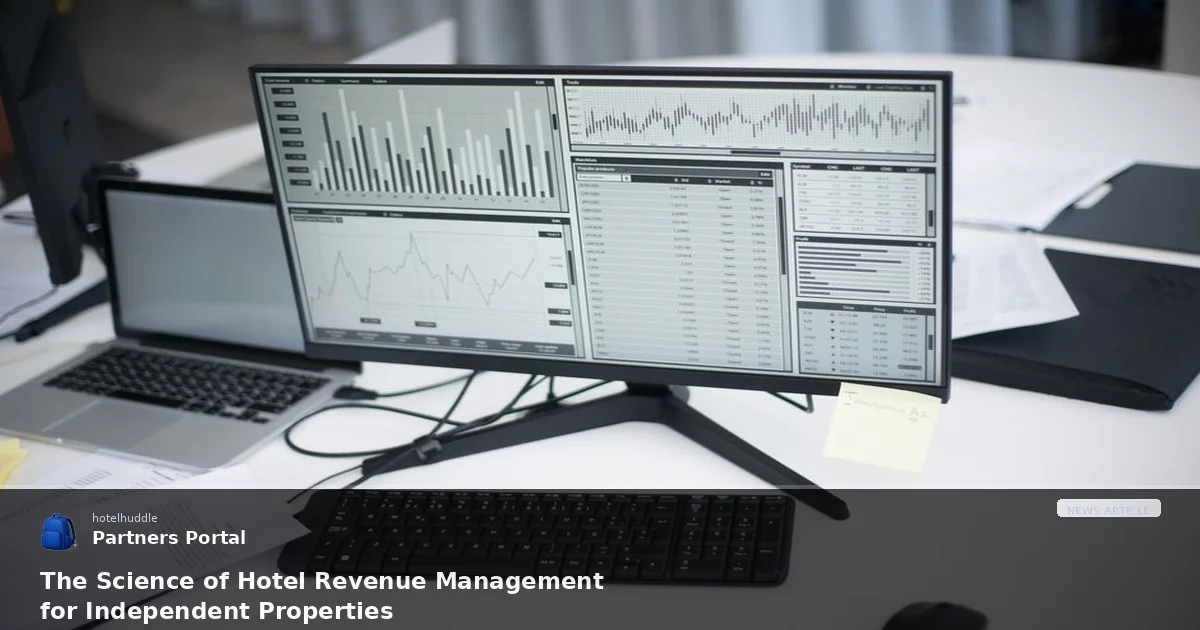
Price against value instead. A property with better reviews, a stronger location, or included breakfast can hold a higher rate than a bare-bones competitor. Set your hotel revenue management dashboard around your own demand signals — pace, pickup, and booking window — and use competitor rates as context, not a command.
Control Your Channels and Your Inventory
Where you sell matters as much as the price you set. Each distribution channel carries a different cost, and the mix you allow determines how much of every booking you actually keep. The highest-margin reservations almost always come through your own direct channel, so structure your distribution to encourage them.
Inventory controls sharpen this further. Length-of-stay restrictions, closed-to-arrival rules, and a deliberate overbooking ceiling each protect revenue on high-demand nights. A hotel partner portal that consolidates your channels and reservations in one place makes it far easier to see which mix is actually profitable and adjust before a weekend, not after it.
Segment Your Guests to Price With Precision
Not every guest is worth the same rate. Business travelers book short windows and value flexibility; leisure guests book earlier and are more price-sensitive; groups fill a block of rooms at once but expect a discount. Pricing each segment on its own terms — rather than one flat rate for everyone — is how strong properties lift blended ADR without turning anyone away.
Run a simple segmentation exercise: pull your last twelve months of reservations and group them by trip purpose and booking window. You will quickly see which segments already pay a premium and which could be nudged higher with minimal risk.
Measure RevPAR, Not Just Occupancy
A full hotel is not automatically a profitable one. Occupancy tells you how many rooms you sold; RevPAR — revenue per available room — tells you how well you sold them. Chasing occupancy alone encourages deep discounting that fills rooms at a loss. Tracking RevPAR alongside occupancy and average daily rate keeps the three metrics in balance and exposes the real cost of every promotional rate.
Review these numbers weekly. When RevPAR climbs while occupancy holds steady, your hotel revenue management strategy is working; when occupancy rises but RevPAR falls, your discounting has gone too far.
Turn the Science Into a Weekly Routine
None of this requires a full-time analyst. A one-hour weekly review — update the forecast, adjust rates for the next 30 days, check channel mix, and log the results — is enough to build a measurable advantage over competitors who price on instinct. Over a quarter, those weekly adjustments compound into meaningfully higher revenue from the same rooms.
Independent properties that treat pricing as a discipline, not a reaction, consistently outperform their local competition. If you are ready to put structure behind your rates, the first step is to list your hotel on a platform built to support hotel revenue management, group bookings, and direct reservations — so every decision you make is backed by data, not guesswork.